Activated Carbon for Clean Biogas
Raw biogas from anaerobic digestion contains a range of impurities that damage equipment, reduce energy yield, and create environmental risks. Jacobi’s activated carbon solutions address four key contaminants at targeted points in the purification train — delivering clean, safe biogas for power generation or grid injection.
H₂S forms during anaerobic digestion of sulphur-containing proteins. Even at low concentrations it corrodes engines, degrades lubricating oil, and produces toxic SO₂/SO₃ in exhaust gases. For biomethane grid injection, H₂S must typically be reduced below 5 ppm.
Ammonia is generated from nitrogen-rich feedstocks such as manure, sewage sludge, and food waste. It causes catalyst poisoning in downstream upgrading systems, promotes corrosion, and results in NOₓ emissions on combustion. Removal is critical for both CHP and biomethane applications.
Siloxanes originate from consumer products concentrated at landfill and wastewater treatment sites. During combustion they oxidise to hard, abrasive silicon dioxide (SiO₂), depositing on pistons, valves and turbine blades, causing rapid and costly mechanical wear.
Volatile organic compounds — including terpenes, alcohols, ketones, and halogenated compounds — cause odour, reduce biogas quality, and foul upgrading membranes. High-surface-area activated carbon physically adsorbs these compounds in a final polishing step before end-use.
Mobile Filter Units (MFU)
Raw biogas from anaerobic digestion contains a range of impurities that damage equipment, reduce energy yield, and create environmental risks. Jacobi’s activated carbon solutions address four key contaminants at targeted points in the purification train — delivering clean, safe biogas for power generation or grid injection.
Reactivating Spent Activated Carbon
Lorem ipsum dolor sit amet, consectetur adipiscing elit. Ut elit tellus, luctus nec ullamcorper mattis, pulvinar dapibus leo.
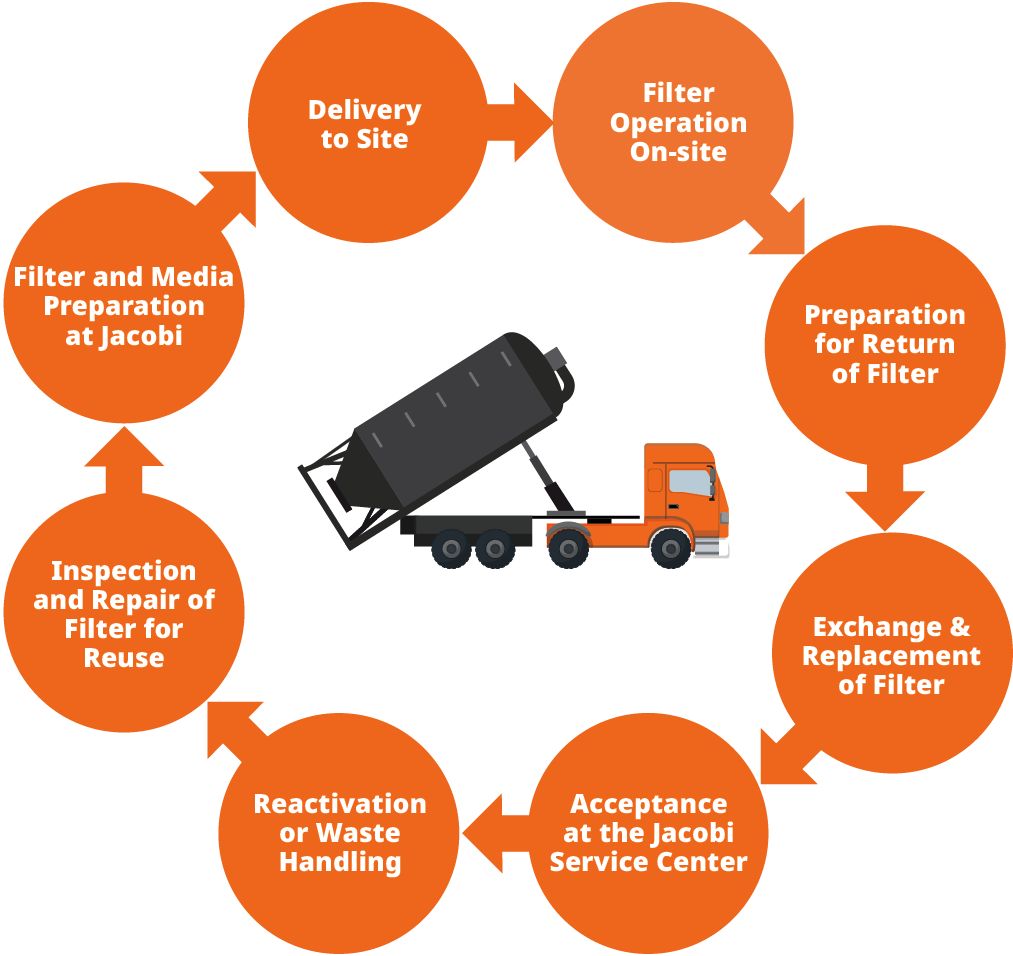
A Full Cycle Solution
Lorem ipsum dolor sit amet, consectetur adipiscing elit. Ut elit tellus, luctus nec ullamcorper mattis, pulvinar dapibus leo.
GET IN TOUCH
Fill out the short form below and our team will be in touch.
*Indicates a mandatory field.